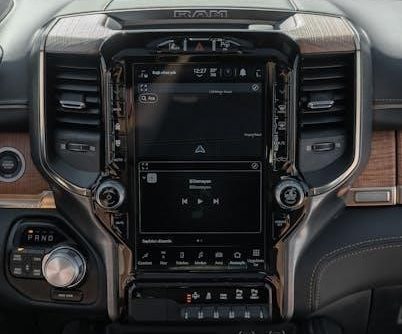
This manual details the 2013 Dodge Avenger’s features, operation, maintenance, and safety systems. It’s a vital resource for all owners, offering comprehensive guidance and support.
Access the 2013 Avenger manual online, download the PDF, or consult fellow owners for assistance. This guide covers standard and optional equipment, even if not present on your specific vehicle.
Information includes vehicle identification details, like the VIN, and specifications such as engine and transmission data. Explore resources for customer support and service center locations.
Purpose of the Manual
This 2013 Dodge Avenger Owner’s Manual serves as a comprehensive guide to understanding and operating your vehicle effectively and safely. It’s designed to familiarize you with all features, both standard and optional, even those not equipped on your specific model.
The manual details proper vehicle maintenance procedures, ensuring longevity and optimal performance. It provides crucial information regarding safety systems, like airbags and electronic stability control, promoting responsible driving habits.
Furthermore, it assists in troubleshooting common issues and interpreting warning lights. Accessing this resource empowers owners to maximize their driving experience and maintain their Avenger in peak condition, alongside available online resources and customer support.
Vehicle Identification Number (VIN) Location
Locating your 2013 Dodge Avenger’s Vehicle Identification Number (VIN) is crucial for various reasons, including warranty claims, service records, and theft recovery. The VIN is a unique 17-digit code specific to your vehicle.
You can find the VIN in several places on your Avenger. It’s typically located on the driver’s side dashboard, visible through the windshield. Additionally, the VIN is present on the driver’s side doorjamb sticker and on your vehicle’s registration and insurance documents.
Referencing the VIN ensures accurate parts ordering and proper vehicle identification when seeking service or assistance. Keep a record of your VIN for easy access.
Understanding Your Vehicle’s Features
The 2013 Dodge Avenger offers a range of features designed for comfort, convenience, and safety. This manual serves as your guide to fully understanding and utilizing these capabilities.
Features covered include the audio system, climate control, and potentially a navigation system, depending on your vehicle’s trim level. Familiarize yourself with dashboard controls and indicators for optimal operation.
The manual details both standard and optional equipment, acknowledging that your specific Avenger may vary. Understanding these features enhances your driving experience and ensures proper vehicle maintenance.

Vehicle Overview
This section details the 2013 Dodge Avenger’s exterior and interior components. It provides a comprehensive look at the vehicle’s design and layout for owners.
Exterior Features
The 2013 Dodge Avenger boasts a sleek and modern exterior design. Key features include the prominent front grille, sculpted headlights, and aerodynamic body lines. Explore the exterior lighting system, encompassing headlights, taillights, and turn signals, for optimal visibility.
Inspect the exterior mirrors, including manual or power adjustment options, and understand their functionality. Familiarize yourself with the door handles and locks, ensuring secure vehicle access. The vehicle’s wheels and tires are crucial for performance and safety; refer to the tire information section for details.
Additionally, understand the operation of the windshield wipers and washers for clear visibility in various weather conditions. The exterior features contribute to both the vehicle’s aesthetic appeal and functional performance.
Interior Features
The 2013 Dodge Avenger’s interior is designed for comfort and convenience. Discover the adjustable seating, including manual or power options, and understand seat adjustments for optimal positioning. Explore the interior lighting system, providing illumination for driving and passenger comfort.
Familiarize yourself with the steering wheel controls, allowing access to audio and other vehicle functions. The interior trim materials and finishes contribute to the overall aesthetic. Understand the operation of the interior door locks and handles, ensuring passenger safety and security.
Additionally, locate and understand the function of the glove compartment and center console storage areas.
Dashboard Controls and Indicators
The 2013 Dodge Avenger’s dashboard houses essential controls and indicators for safe operation. Learn to operate the windshield wipers and washers, ensuring clear visibility in various weather conditions. Understand the headlight and turn signal controls, vital for signaling intentions to other drivers.
Familiarize yourself with the instrument cluster, displaying crucial information like speed, fuel level, and engine temperature. Recognize warning lights and indicators, alerting you to potential vehicle issues requiring attention. Understand the hazard light function for emergency situations.
Locate and understand the operation of the climate control settings.

Operating Your Vehicle
This section details starting, stopping, and driving the 2013 Dodge Avenger safely. It covers essential procedures and provides guidance for optimal vehicle performance.
Starting and Stopping the Engine
Starting the 2013 Dodge Avenger requires a fully depressed brake pedal and a turn of the ignition key to the ‘Start’ position. Ensure the gear selector is in ‘Park’ or ‘Neutral’ before attempting to start. Listen for the engine to catch and release the key once running.
To stop the engine, shift the gear selector to ‘Park’ and turn the ignition key to the ‘Off’ position. Remove the key to prevent accidental activation. Always allow the engine to idle briefly before shutting it down, especially after vigorous driving, to ensure proper cooling and lubrication. Following these procedures will contribute to the longevity and reliable operation of your vehicle’s engine.
Driving Modes (if applicable)
The 2013 Dodge Avenger offers standard driving modes tailored for various conditions. While not featuring selectable drive modes like some modern vehicles, the transmission adapts to driving style. Aggressive acceleration prompts quicker downshifts, while gentle pressure prioritizes fuel efficiency.
The AutoStick function allows for manual gear selection, providing greater control during spirited driving or challenging terrain. This feature enables the driver to override automatic shifting, selecting desired gears for optimal performance. Understanding these nuances enhances the driving experience and allows for a more connected feel with the vehicle’s powertrain.
Fueling Information
The 2013 Dodge Avenger requires unleaded gasoline with an octane rating of 87 or higher. The fuel tank capacity is approximately 18.5 gallons (70 liters). Always ensure the fuel cap is securely tightened after refueling to prevent fuel vapor emissions.
Refer to the owner’s manual for specific fuel recommendations and warnings regarding fuel additives. Using incorrect fuel can negatively impact engine performance and potentially cause damage. Avoid fuels containing metallic additives. Locate the fuel filler door release within the vehicle; consult the manual for its precise location.

Maintenance and Care
Regular maintenance, including fluid checks and scheduled replacements, is crucial for optimal performance and longevity of your 2013 Dodge Avenger.
Recommended Maintenance Schedule
Maintaining your 2013 Dodge Avenger according to the recommended schedule ensures reliability and extends its lifespan. This schedule, detailed in the owner’s manual, outlines specific inspections and services at various mileage intervals.
Key services include oil and filter changes, tire rotations, fluid level checks (coolant, brake, power steering, transmission), and inspections of belts, hoses, and brakes. More extensive services, like spark plug replacement and timing belt inspection, are scheduled at higher mileage points.
Adhering to this schedule helps prevent unexpected breakdowns and costly repairs. The manual provides a clear, easy-to-follow guide for keeping your Avenger in top condition, maximizing its performance and value. Ignoring scheduled maintenance can void warranty coverage.
Fluid Checks and Replacements
Regularly checking and replacing fluids is crucial for the 2013 Dodge Avenger’s optimal performance. The owner’s manual details the specific types of fluids required and the recommended replacement intervals.
Essential fluids include engine oil, coolant, brake fluid, power steering fluid, transmission fluid, and windshield washer fluid. Inspect fluid levels routinely and top off as needed. Pay attention to fluid color and consistency, as changes can indicate potential problems.
Proper fluid maintenance prevents component wear and tear, ensuring smooth operation and extending the vehicle’s life. Following the manual’s guidelines is vital for maintaining warranty coverage and avoiding costly repairs.
Tire Information and Maintenance
Maintaining proper tire pressure and condition is essential for safety and performance of your 2013 Dodge Avenger. The owner’s manual specifies the recommended tire pressure for optimal handling and fuel efficiency – found on the tire placard.
Regularly inspect tires for wear, damage, and uneven tread patterns. Rotate tires according to the recommended schedule to ensure even wear and maximize their lifespan. Check for cuts, bulges, or embedded objects.
Proper tire maintenance enhances braking performance, stability, and overall driving experience. Adhering to the manual’s guidelines contributes to safe operation and extends tire longevity.

Safety Features
The 2013 Dodge Avenger prioritizes occupant protection with features like airbags, seatbelts, and Electronic Stability Control (ESC). Understand their proper operation.
Airbag System
Your 2013 Dodge Avenger is equipped with an advanced airbag system designed to provide supplemental protection in the event of a collision. This system includes front airbags for both driver and passenger, as well as side curtain airbags for enhanced safety.
It’s crucial to understand that airbags are designed to work with seatbelts, not as a replacement for them. Always ensure all occupants are properly restrained. The airbag system’s sensors detect the severity of an impact and deploy airbags accordingly.
Improper seating positions, especially for children, can increase the risk of injury during airbag deployment. Refer to the manual for specific guidelines regarding child safety seats and airbag deactivation (if equipped). Regular inspection of the airbag system is not typically required, but any warning lights should be addressed immediately by a qualified technician.
Seatbelt Usage
Proper seatbelt usage is the most important safety measure in your 2013 Dodge Avenger. Seatbelts significantly reduce the risk of serious injury or death during a collision, working in conjunction with the vehicle’s airbag system.
All occupants should wear properly fitted seatbelts at all times, regardless of seating position. Ensure the lap belt lies snugly across the hips, and the shoulder belt crosses the chest and collarbone. Avoid placing the shoulder belt across the neck or face.
The Avenger features three-point seatbelts in all seating positions. Regularly inspect seatbelts for damage or wear, and replace them if necessary. Never modify or disable seatbelts. Children should be secured in appropriate child restraint systems until they are large enough to safely use the vehicle’s seatbelts.
Electronic Stability Control (ESC)
Your 2013 Dodge Avenger is equipped with Electronic Stability Control (ESC), a vital safety system designed to assist in maintaining directional control during challenging driving conditions. ESC detects and mitigates skidding by selectively applying brakes to individual wheels.
The ESC system activates automatically when it senses a loss of steering control. A flashing ESC indicator light on the instrument panel signals that the system is actively working. ESC is not a substitute for safe driving practices; always maintain a safe speed and following distance.
While ESC enhances stability, it cannot overcome the laws of physics. Be aware of road conditions and adjust your driving accordingly. The system may be temporarily limited during certain maneuvers or on slippery surfaces.
In-Depth Systems Guide
Explore detailed operation instructions for the 2013 Avenger’s audio, climate control, and optional navigation systems. This section provides comprehensive system insights.
Audio System Operation
The 2013 Dodge Avenger’s audio system offers a range of features for an enhanced driving experience. Controls are typically located on the steering wheel and the dashboard, allowing for convenient access to volume, tuning, and source selection.
Supported media sources may include AM/FM radio, CD player, auxiliary input, and USB connectivity. Some models might also feature Bluetooth® wireless technology for streaming audio from compatible devices and hands-free calling.
The system often includes preset buttons for quick access to favorite radio stations. Explore the menu options to adjust equalizer settings, balance, and fader for personalized sound. Refer to the owner’s manual for specific details regarding your vehicle’s audio configuration and available features.
Climate Control System
The 2013 Dodge Avenger’s climate control system is designed to maintain a comfortable cabin temperature for both driver and passengers. Controls, usually found on the dashboard, allow adjustment of temperature, fan speed, and airflow direction.
Systems can range from manual controls to automatic climate control, which maintains a set temperature automatically. Features often include air conditioning, heating, and defrost modes for the windshield and rear window.
Recirculation mode helps to quickly cool or heat the cabin and can improve air quality. Consult your owner’s manual for specific instructions on operating the climate control system and understanding its various settings for optimal performance.
Navigation System (if equipped)
If your 2013 Dodge Avenger is equipped with a navigation system, it provides turn-by-turn directions to your desired destination. The system typically utilizes a touchscreen interface for input and display of map information.
Features often include real-time traffic updates, points of interest (POI) searching, and route customization options. The owner’s manual details how to input destinations, adjust settings, and utilize the system’s advanced features.
Map updates are crucial for accurate navigation and can usually be purchased or downloaded through the manufacturer. Familiarize yourself with the system’s voice guidance and safety features for optimal use while driving.
Troubleshooting
This section addresses common issues, warning lights, and provides solutions for your 2013 Dodge Avenger. It also details emergency assistance procedures for peace of mind.
Common Issues and Solutions
Addressing typical concerns with your 2013 Dodge Avenger is crucial for maintaining optimal performance. Frequent issues may include difficulties starting the engine, often linked to a weak battery or faulty starter.
Problems with the audio system are also reported, potentially requiring a reset or inspection of the wiring. Climate control malfunctions, like inconsistent temperature, could indicate a low refrigerant level or a failing compressor.
For warning lights, consult the manual’s indicator guide. Simple fixes, like tightening a gas cap, can resolve some alerts. If issues persist, seeking professional diagnosis and repair is recommended to prevent further damage and ensure vehicle safety.
Warning Lights and Indicators
The 2013 Dodge Avenger utilizes a comprehensive system of warning lights and indicators to alert drivers to potential issues. Understanding these signals is vital for safe operation and preventative maintenance.
A lit “Check Engine” light signifies a problem with the engine or emissions system, requiring diagnosis. The “ABS” light indicates an issue with the anti-lock braking system, impacting braking performance.
Low tire pressure is signaled by a dedicated TPMS indicator. Refer to your owner’s manual for a complete list and detailed explanations of each warning light, alongside recommended actions. Ignoring these signals can lead to more significant and costly repairs.
Emergency Assistance
In the event of an emergency, your 2013 Dodge Avenger owner’s manual directs you to crucial assistance resources. Dodge Customer Assistance provides support for vehicle-related concerns and can guide you through troubleshooting.
For immediate roadside assistance, locate your vehicle’s warranty information for contact details. This may include towing services, jump starts, and tire changes.
The manual also emphasizes the importance of knowing your vehicle’s location for accurate dispatch. Online owner resources offer additional support, and a service center locator helps find qualified technicians quickly. Prioritize safety and seek professional help when needed;
Technical Specifications
This section details the 2013 Dodge Avenger’s engine, transmission, dimensions, and capacities. VIN-related data (like 800. Y4A11F8CV) is also included for reference.
Engine Specifications
The 2013 Dodge Avenger offered several engine options, impacting performance and fuel economy. The standard engine was a 2.4-liter four-cylinder, producing approximately 173 horsepower and 166 lb-ft of torque.
An available 3.6-liter Pentastar V6 engine delivered significantly more power, around 285 horsepower and 260 lb-ft of torque. Both engines paired with a six-speed automatic transmission. Fuel requirements varied; consult your vehicle’s documentation for the correct octane rating.
Engine codes and specific details, potentially including VIN-related identifiers (like those found in the broader technical specifications), can help pinpoint the exact engine configuration for your 2013 Avenger. Proper maintenance, as outlined in the owner’s manual, is crucial for optimal engine performance and longevity.
Transmission Specifications
The 2013 Dodge Avenger exclusively utilized a six-speed automatic transmission across all engine options. This transmission was designed to provide smooth shifting and optimized fuel efficiency, complementing both the 2.4-liter four-cylinder and the 3.6-liter V6 engines.
The transmission features include driver-selectable AutoStick functionality, allowing for some degree of manual gear control. Regular fluid checks and replacements, detailed in the maintenance section of the owner’s manual, are vital for transmission health.
Specific transmission codes or identifiers may be linked to the vehicle’s VIN, providing further detail about its internal configuration. Proper operation and maintenance, as described in the manual, ensure reliable performance and longevity.
Dimensions and Capacities
The 2013 Dodge Avenger boasts a length of approximately 192.2 inches (4882 mm) and a width of 72.5 inches (1842 mm). Its height measures around 58.5 inches (1486 mm), providing a comfortable interior space. Wheelbase is 108.0 inches (2743 mm), contributing to ride stability.
Fuel tank capacity is 18.5 gallons (70 liters), offering a substantial driving range. Cargo volume behind the rear seats is approximately 13.6 cubic feet (385 liters), expanding with the seats folded.
Curb weight varies depending on the engine and trim level, ranging from roughly 3338 to 3652 pounds (1514 to 1657 kg). These specifications are crucial for understanding vehicle handling and load limits.

Warranty Information
The 2013 Dodge Avenger is covered by a basic vehicle warranty, a powertrain warranty, and a corrosion warranty. Details regarding coverage periods and limitations are provided;
Review the warranty booklet for specific terms, conditions, and claim procedures. Understanding your warranty ensures peace of mind and protects your investment.
Basic Vehicle Warranty
The 2013 Dodge Avenger’s basic vehicle warranty provides coverage for defects in materials or workmanship. This comprehensive warranty typically covers a specified period, often 3 years or 36,000 miles, whichever comes first, from the original purchase date.
It encompasses a wide range of components, protecting against unexpected repairs during normal use. Coverage includes, but isn’t limited to, defects in parts like the engine, transmission, and electrical systems.
Owners should consult their warranty booklet for a complete list of covered components and any associated exclusions. Maintaining proper vehicle maintenance, as outlined in the owner’s manual, is crucial for warranty validity. Keep detailed records of all service performed.
Powertrain Warranty
The 2013 Dodge Avenger’s powertrain warranty offers extended coverage for the vehicle’s most vital components. Typically, this warranty surpasses the basic vehicle warranty, often lasting 5 years or 60,000 miles, whichever occurs first, from the original purchase date.
It specifically protects the engine, transmission, and drivetrain – essential for vehicle operation. This provides peace of mind against major mechanical failures related to these core systems.
Review the warranty booklet for precise details regarding covered parts and any limitations. Adhering to the recommended maintenance schedule outlined in the owner’s manual is vital to maintain powertrain warranty coverage. Proper care ensures long-term reliability.
Corrosion Warranty
The 2013 Dodge Avenger includes a corrosion warranty designed to protect against rust and deterioration of the vehicle’s body. This warranty typically covers defects in materials or workmanship causing rust-through, offering a substantial period of protection, often 5 years or 100,000 miles.
Coverage generally applies to factory-applied corrosion protection, not damage from accidents, modifications, or environmental factors. Maintaining the vehicle’s paint and protective coatings is crucial for warranty validity.
Consult the warranty guide for specific details regarding covered components and exclusions. Regular washing and undercarriage inspections, especially in regions with road salt, are recommended to maximize corrosion resistance.

Additional Resources
Dodge customer assistance, online owner resources, and a service center locator are readily available. These tools provide support and maintenance options for your 2013 Avenger.
Dodge Customer Assistance
For direct support regarding your 2013 Dodge Avenger, Dodge provides dedicated customer assistance channels. Owners can access a wealth of information and personalized help to address any questions or concerns they may have about their vehicle’s operation, maintenance, or warranty.
Dodge’s customer service team is equipped to handle a wide range of inquiries, from understanding specific features to resolving potential issues. They can guide you through the owner’s manual, explain warning lights, and assist with scheduling service appointments.
Contact information for Dodge Customer Assistance is typically available on the official Dodge website, offering phone numbers, email addresses, and online chat options for convenient access to support. Utilizing these resources ensures a positive ownership experience.
Online Owner Resources
Dodge offers a comprehensive suite of online resources specifically for 2013 Dodge Avenger owners. These digital tools provide convenient access to the owner’s manual in downloadable PDF format, allowing for offline viewing and printing.
The official Dodge website hosts a dedicated owner’s section, featuring frequently asked questions, troubleshooting guides, and helpful videos demonstrating vehicle features. Owners can also register their vehicle online to receive important updates and recall notifications.
Furthermore, online forums and communities dedicated to the Dodge Avenger provide a platform for owners to connect, share experiences, and exchange valuable information regarding maintenance, repairs, and modifications.
Locating a Service Center
Dodge provides several convenient methods for locating authorized service centers for your 2013 Dodge Avenger. The official Dodge website features a “Find a Dealer” tool, allowing you to search by zip code or city to identify nearby service locations.
This tool displays dealer contact information, including addresses, phone numbers, and operating hours. Many dealerships also offer online appointment scheduling, streamlining the service process.
For urgent repairs or roadside assistance, the Dodge Customer Assistance center can direct you to the nearest qualified service provider. Utilizing authorized service centers ensures your Avenger receives genuine Dodge parts and expert maintenance.